Saturday, June 1, 2013

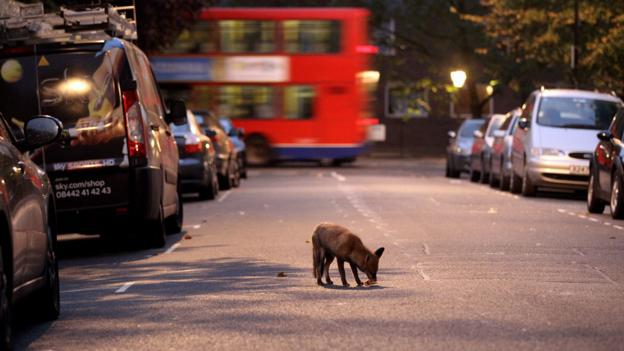
Why we need to bring nature back into cities


Cities will need to incorporate the natural world in new and innovative ways. Parks and green spaces will be multiplied from ground level upwards, attracting birds and wildlife to sky-gardens, tens of floors up. In Singapore, for example, the Marina Bay Sands hotel features a skypark on the 56th floor, with trees, leisure facilities including a pool, and far-reaching views. It’s an example of how specific elements found in the natural world, such as a mountaintop view, a lake and palm trees, have been cherry picked and combined to provide an easy, entirely artificial landscape for the city.

Vertical farms are also being planted in Anthropocene cities, although the energy involved in irrigating and maintaining such farms makes them impractical for food production on a larger scale. However, growing food in the urban environment on regular multi-storey plots is likely to increase as hobby farmers, beekeepers and specialist growers take advantage of cleaner air, water and soils of Anthropocene cities, and vacant sites are used more effectively. In Berlin, rooftop fishfarms have been started, with the waste going to feed agricultural plots in the city. Creative growers are already converting industrial spaces, street corners and rooftops to micro-wildernesses or manicured into formal gardens. A disused raised railway in New York City has become a popular park, self-styled “guerilla gardeners” are planting flowers and trees in plots among the tarmac and traffic of London’s highways, and once-polluted industrial wastelands now chirp with birdsong, rivers swim with fish and populations of animals that have become rare in the countryside are thriving in urban niches.

Why we need to bring nature back into cities (BBC Future)

Saturday, April 20, 2013

Urban Minds


Human populations have lived a rural lifestyle through most of history, depending on agriculture or hunting and gathering. As abundant oil reserves fueled the rise of modern civilization, urban life grew along with it. In 1800 only 3% of the world’s population lived in cities, in 1900 that number reached 14% which increased to 30% in 1950. The majority of our species became urban in 2008 as more than half of humans are now living in cities. Because of petroleum powered agriculture we’ve supplanted increasingly more humans from food production into other activities. With the exhaustion of our biosphere and the end of cheap oil can we draw on examples from cities of the past to shape the human population centers of the future? Will lessons before economic growth provide a context for life after growth?

In Extraenvironmentalist #48 we speak with archaeologist Paul Sinclair about the Urban Mind project. Paul discusses a new field of archaeological research that is discovering the role of urban gardening throughout history and during wartime in ancient cities. We ask Paul about the role of cities in shaping the way humans think and he tells us how he survived a food crisis in Mozambique. After discussing a world before economic growth, Donnie Maclurcan of the Post Growth Institute tells us how we can start building a post-growth world [1h 14m]. Donnie describes the benefits of asset mapping your community and why you should participate in Free Money Day on September 15th. Last of all, John Michael Greer joins us [1h 58m] to answer listener questions and to talk about David Korowicz’s FEASTA study, Trade Off: A Study in Global Systemic Collapse which details how a cascading collapse could lead to rapid end for the global supply chain.


[ Extraenvironmentlist #48 // Urban Minds ]

Tuesday, March 26, 2013

The Esozoic City


A growing worldwide movement is looking at cities through the lens of living systems. In countless practical projects, city dwellers are re-connecting with the soils, trees, animals, landscapes, energy systems, water, and energy sources on which all life depends.

For the moment, this movement is mostly bottom-up, small-scale, and low-budget. It’s a barely visible mosaic in which rivers are restored by volunteers, car parks are depaved by activists, trees are planted by community teams, rainwater is harvested by neighbours, gadens are tended by school students, and nesting boxes for birds are installed by twitchers.

A lot of this work is carried out by community groups working street-by-street. As more small projects are completed,the to-do list expands. People notice that there are neglected parks to transform, gardens to revive, roadside verges to plant, empty roofs to green. There are vacant lots, abandoned buildings and empty malls to put to new use.

The fact that most of these actions are small does not diminish their significance. Change bubbling up from the bottom is how complex systems change – and cities are no exception. Besides, this proliferation of green shoots creates new work for for city managers and policy makers to do: Nurturing these thousands of tiny patches, removing obstacles, linking them together.

A startling question begins to be heard: Pull that weed out of its crack in the sidewalk – or let it grow?’

The Esozoic City (The Doors of Perception)

Greening the Concrete Jungle


Whether the cities of the Anthropocene will be environmentally sustainable or not depends on how the slum districts of developing world cities evolve. Will cities follow the inefficient North American model: suburban sprawl of highway-linked satellite towns, or rather the closely packed high-rises of Hong Kong and Singapore? Seoul is one example of how a city can transform in a couple of decades – from a filthy slum in which one-third lived in low-rise squatter settlements, to a shining functioning city of metro-linked skyscrapers in which most of the 25 million population live in healthy surroundings.

Apart from a few examples, most cities were never designed or planned, they grew - sometimes over thousands of years – in an ad hoc pattern. Occasionally, sections would be entirely rebuilt according to architects’ plans, but these opportunities were usually the result of disasters, such as earthquakes or bombings, or because of grand schemes, such as slum clearance, industrial development or large-scale municipal constructions, such as a new highway or transport system.

Now architects are having to re-think the city in the age of high population, strained resource use and global environmental impacts. In some places, such as Tianjin in China, planners are designing entirely new cities for the Anthropocene, trying to avoid errors of the past and achieve a sustainable solution from the outset.

Sustainability in the new urban age (BBC Future)

Saturday, March 16, 2013

Urban Aquaponics


Aquaponics is a method of combined fish and vegetable farming that requires no soil. The farmer cultivates freshwater fish (aquaculture) and plants (hydroponics) in a recirculating water system that exchanges nutrients between the two. Wastewater from the fish serves as organic fertilizer for the plants, while the plants clean the water of fish feces and urine. The net result: a 90 percent reduction in freshwater use compared with conventional fish farming, and a significant reduction in added nutrients such as fossil fertilizers. The system can be run without pesticides and, because the fish environment is spacious and clean, without antibiotics.

I had first heard about aquaponics from a friend in Nashville, Tenn., where I ran the North American branch of Franke, a Swiss espresso equipment supplier. I was intrigued by the method’s natural resource efficiency and its potential for large-scale urban cultivation. But it took me until this moment in Graber’s lab to recognize how dramatically aquaponics would change my life and that it could radically change how we feed the booming cities around the world.

The Farming Technique That Could Revolutionize the Way We Eat (The Atlantic Cities)

Friday, February 1, 2013

Sky Farming In Singapore


With a population of five million crammed on a landmass of just 715 square kilometres, the tiny republic of Singapore has been forced to expand upwards, building high-rise residential complexes to house the country’s many inhabitants.

Now Singapore is applying the vertical model to urban agriculture — experimenting with rooftop gardens and vertical farms in order to feed its many residents.

Currently only seven percent of Singapore’s food is grown locally. The country imports most of its fresh vegetables and fruits daily from neighbouring countries such as Malaysia, Thailand and the Philippines, as well as from more distant trading partners like Australia, New Zealand, Israel and Chile.

An influx of immigrants has resulted in a rapid crowding of Singapore’s skyline, as more and more towering apartment buildings shoot up. And meanwhile, what little land was available for farming is disappearing fast.

The solution to the problem came in the form of a public-private partnership, with the launch of what has been hailed as the “world’s first low-carbon, water-driven, rotating, vertical farm” for growing tropical vegetables in an urban environment.

The result of a collaborative agreement between the Agri-Food and Veterinary Authority of Singapore (AVA) and a local firm, Sky Green, this venture aims to popularise urban farming techniques that are also environmentally friendly.

Farming in the Sky in Singapore (OurWorld 2.0)

Thursday, November 29, 2012

Farming on the Rooftops of Brooklyn

From a 10,000 square foot rooftop greenhouse to an acre+ sized rooftop farm, Brooklyn's skyline seems to be coming increasingly agricultural. And it's a concept that makes sense.

While high-tech vertical farms may be more technophile eye candy than a working model for our food system, it seems hard to argue that many of our city's have vast acreages of flat roofs that could become productive, food growing, community-building spaces.


Farming on the Rooftops of Brooklyn (Treehugger)